Historic
Laas Geel
Rock shelters with polychrome paintings of cattle and people, recorded by a French team in 2002 and dated to around the 3rd millennium BCE. About 50–55 km north-east of the city.

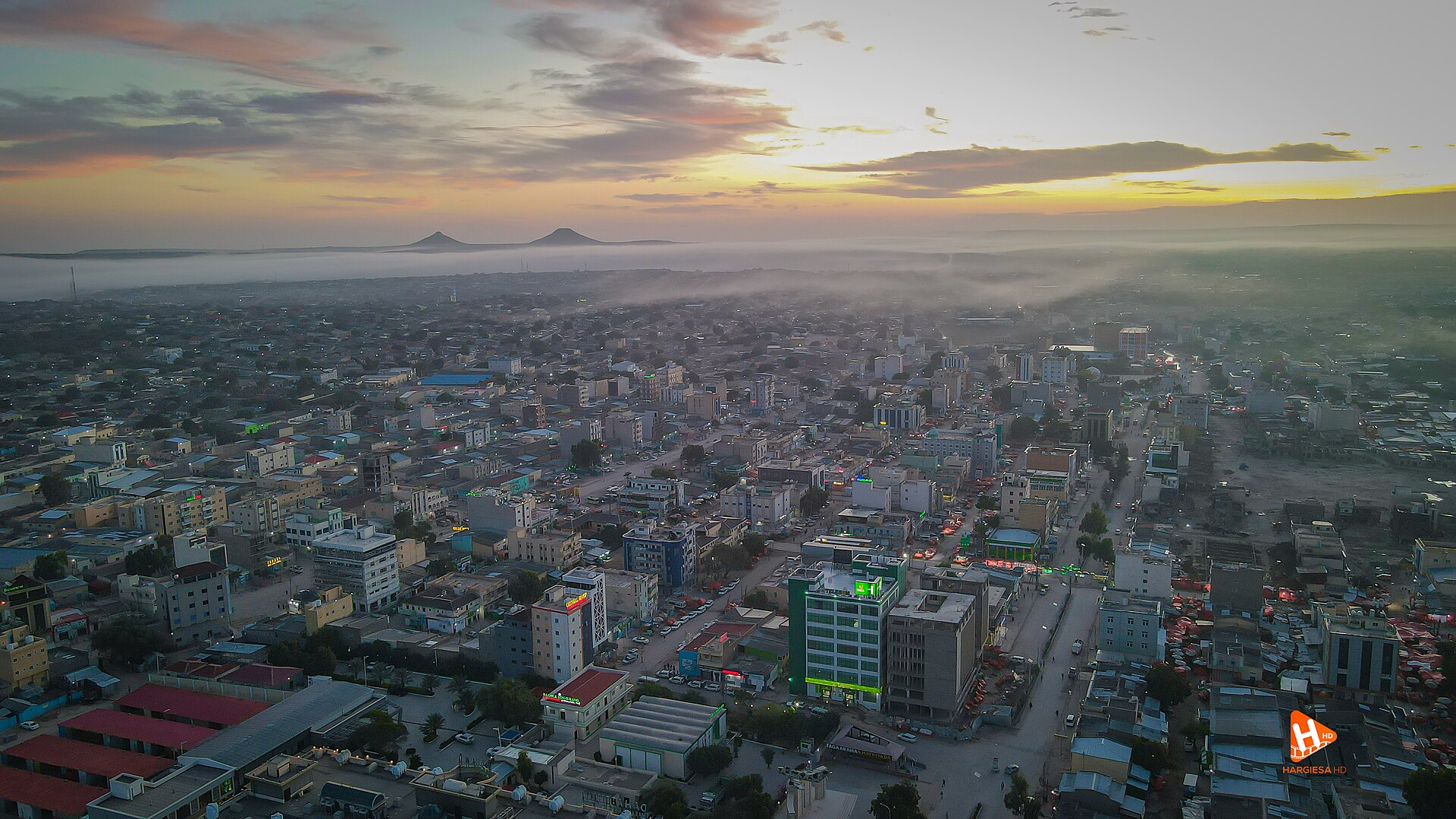
A highland city and the seat of the Somaliland administration: busy markets, an international book fair and the ancient Laas Geel rock paintings within easy reach.
Hargeysa is the largest city in north-western Somalia and the seat of the Somaliland administration and of the Maroodi Jeex region. It lies in a valley of the Galgodon (Ogo) highlands at roughly 1,330 metres above sea level, which gives it a noticeably milder climate than the coast.
The city is a hub for trade, money transfer and transport, linking the port of Berbera with the interior of the Horn of Africa. Its central markets, money-exchange stalls and livestock market are constantly busy, while cultural venues and an annual book fair have made it a meeting point for young people and writers.
Somaliland declared independence in 1991; the Federal Government of Somalia considers it part of Somalia, and it is not recognised as a state by the United Nations or most countries.
Rock shelters with polychrome paintings of cattle and people, recorded by a French team in 2002 and dated to around the 3rd millennium BCE. About 50–55 km north-east of the city.
A fighter jet mounted in the city centre in memory of the 1988 war.
A cultural venue for exhibitions, readings and talks; it hosts the book fair.
A large market where camels, sheep, goats and cattle are traded — a window into pastoral life.
The commercial heart of the city, with shops, money changers and street traders.
The main mosque in the city centre.
Resting place of Sheikh Madar, credited with founding the settlement.
Twin hills on the edge of the city and one of its best-known landmarks.
This list contains verified names; editors keep adding more.
Hargeysa grew from a religious settlement founded by Sheikh Madar in the 19th century into a trading town. In 1941 the British moved the capital of the British Somaliland protectorate from Berbera to Hargeysa.
The protectorate became independent on 26 June 1960 and, five days later, united with the south to form the Somali Republic. Much of the city was destroyed during the civil war in 1988; since 1991 it has been extensively rebuilt, largely with remittances from the diaspora and investment by local business people.
The Hargeysa International Book Fair, founded in 2008 by the Redsea Cultural Foundation, is one of the best-known cultural events in the Horn of Africa. It is held every July and hosted by the Hargeysa Cultural Centre.
The war memorial in the city centre, built around a fighter jet, commemorates the 1988 conflict, while the shrine of Sheikh Madar and the large mosques reflect the city's religious heritage. Somali poetry, song and oral literature have a strong home here.
Hargeysa's economy rests on trade, money-transfer services and diaspora remittances, construction and the livestock trade. The city is closely tied to the port of Berbera, through which goods move to the interior and to Ethiopia.